
Kudo Pit Pattern
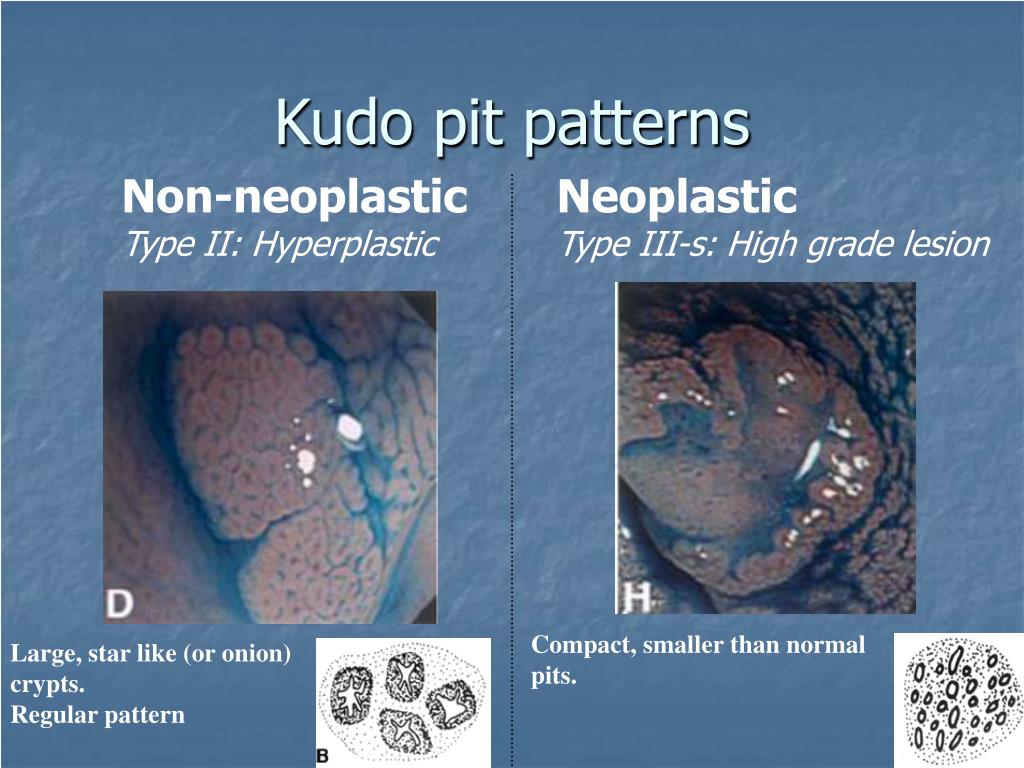
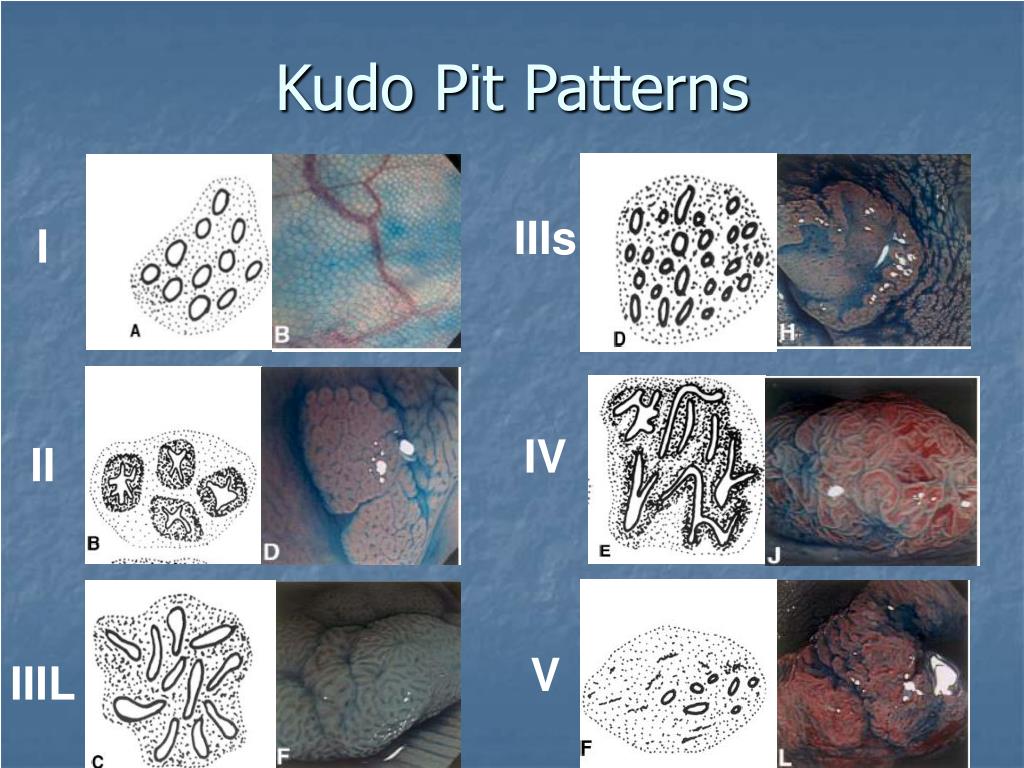
Kudo Pit Pattern - Web the kudo pit pattern classification system uses magnification colonoscopy with dye spray (chromoendoscopy) to categorize polyps based on the appearance of their pits, which are crypt openings. Web a value of 4 or higher in the kudo classification turned out to be the best parameter to differentiate malignant lesions from benign ones for lesions larger than 1 cm and laterally spreading tumors, with a sensitivity of 91.2% and a specificity of 70.4%. Web for microvascular pattern evaluation, the nbi international colorectal endoscopic (nice) classification and the japanese nbi expert team (jnet) classification are the most widely disseminated, while the kudo classification is the gold standard for pit pattern assessment using crystal violet [15,24]. Web pain visual analog scale (vas) and emotional scale were used to evaluate pain and emotions in both groups of patients. Of surgery and gastroenterology, akita red cross hospital, japan. Called the surface microstructure “pit pattern”, and they came to find a constant rule since “pit pattern” was analyzed corresponding to the pathological features and diagnosis. Type ⅰ pits appear as roundish pits; Web the kudo pit pattern (figure 5), with the use of dye chromoendoscopy, has been found to be highly accurate for predicting superficial (type vi) and deep submucosal invasion (type vn). Web a magnifying endoscope was developed with the aim of applying the findings obtained in these studies in vivo. 15 the different pit patterns include round/normal (type i), asteroid (type ii), tubular or round pit that is smaller than the normal (type iiis. Web the kudo pit pattern classification system uses magnification colonoscopy with dye spray (chromoendoscopy) to categorize polyps based on the appearance of their pits, which are crypt openings. Web kudo's pit pattern classification is an accurate diagnostic method for the differentiation of neoplastic colorectal lesions. Web the kudo pit pattern can be assessed on colonoscopy and predicts the presence or absence of neoplasia and malignancy. Web kudo’s pit pattern classification states morphological pit patterns of the lieberkühn crypts by analyzing the superficial mucosa, predicting the histology of colorectal lesions. This scheme broadly categorizes pit patterns into 7 types based on the pit appearance and structure (figure 3 ). Called the surface microstructure “pit pattern”, and they came to find a constant rule since “pit pattern” was analyzed corresponding to the pathological features and diagnosis. Adverse reactions and clinical efficacy were also compared between the two. Web we recommend that the surface characteristics of a polyp should be described using a classification system such as the nice nbi or kudo pit pattern classification. Publication bias is significant in the current available literature. Web the kudo pit pattern with narrow band imaging (nbi) has high sensitivity and specificity for distinguishing adenomas (type iii/iv) from hyperplastic polyps (type i/ii), particularly when used by experts. Publication bias is significant in the current available literature. Web kudo's pit pattern classification was composed seven type pit pattern. S kudo 1 , c a rubio , c r teixeira , h kashida , e kogure. 15 the different pit patterns include round/normal (type i), asteroid (type ii), tubular or round pit that is smaller than the normal (type. Web kudo's pit pattern classification was composed seven type pit pattern. Web the kudo pit pattern can be assessed on colonoscopy and predicts the presence or absence of neoplasia and malignancy. Web a magnifying endoscope was developed with the aim of applying the findings obtained in these studies in vivo. Web kudo pit pattern classification. Web we recommend that the. Adverse reactions and clinical efficacy were also compared between the two. Kudo et al[5] classified colorectal polyps according to their appearance, structure and staining patterns. Web for microvascular pattern evaluation, the nbi international colorectal endoscopic (nice) classification and the japanese nbi expert team (jnet) classification are the most widely disseminated, while the kudo classification is the gold standard for pit. Kudo's pit pattern classification is an accurate diagnostic method for the differentiation of neoplastic colorectal lesions. Web a magnifying endoscope was developed with the aim of applying the findings obtained in these studies in vivo. Web evaluating 2693 lesions, kudos pit pattern v was the strongest factor associated with overt submucosal invasive cancer (odds ratio [or], 1.42; Type ⅰ pits. S kudo 1 , c a rubio , c r teixeira , h kashida , e kogure. The opening to each crypt in the epithelium is known as a pit. Called the surface microstructure “pit pattern”, and they came to find a constant rule since “pit pattern” was analyzed corresponding to the pathological features and diagnosis. 12 however, assessing the. Kudo et al[5] classified colorectal polyps according to their appearance, structure and staining patterns. Web pain visual analog scale (vas) and emotional scale were used to evaluate pain and emotions in both groups of patients. Called the surface microstructure “pit pattern”, and they came to find a constant rule since “pit pattern” was analyzed corresponding to the pathological features and. 6 type i describes small round pits that typically represent normal histology. Web kudo pit pattern classification. 12 however, assessing the kudo pit pattern has limited use owing to dye availability, additional procedural time for their preparation and application and. Web a magnifying endoscope was developed with the aim of applying the findings obtained in these studies in vivo. Called. Publication bias is significant in the current available literature. Stellar or papillary pits are type ii, and roundish tubular pits are classified as type iii (smaller than. Web kudo describes five different ‘pit patterns’. Web a value of 4 or higher in the kudo classification turned out to be the best parameter to differentiate malignant lesions from benign ones for. Web the kudo classification classifies pit pattern as round / normal (type i), asteroid (type ii), tubular or round pit smaller than normal pit (type iiis), tubular or round pit larger than normal pit (type iiil), gyrus/dendritic (iv), irregular arrangement (vi), and loss of decrease of pits with amorphous structure (vn). Web the kudo pit pattern classification system uses magnification. Web the kudo classification classifies pit pattern as round / normal (type i), asteroid (type ii), tubular or round pit smaller than normal pit (type iiis), tubular or round pit larger than normal pit (type iiil), gyrus/dendritic (iv), irregular arrangement (vi), and loss of decrease of pits with amorphous structure (vn). 15 the different pit patterns include round/normal (type i),. Web kudo's pit pattern classification is an accurate diagnostic method for the differentiation of neoplastic colorectal lesions. 12 however, assessing the kudo pit pattern has limited use owing to dye availability, additional procedural time for their preparation and application and. S kudo 1 , c a rubio , c r teixeira , h kashida , e kogure. Web a magnifying endoscope was developed with the aim of applying the findings obtained in these studies in vivo. Publication bias is significant in the current available literature. 6 type i describes small round pits that typically represent normal histology. Web the kudo pit pattern classification system uses magnification colonoscopy with dye spray (chromoendoscopy) to categorize polyps based on the appearance of their pits, which are crypt openings. Kudo's pit pattern classification is an accurate diagnostic method for the differentiation of neoplastic colorectal lesions. Publication bias is significant in the current available literature. Web kudo pit pattern classification. Web the kudo pit pattern (figure 5), with the use of dye chromoendoscopy, has been found to be highly accurate for predicting superficial (type vi) and deep submucosal invasion (type vn). Web we recommend that the surface characteristics of a polyp should be described using a classification system such as the nice nbi or kudo pit pattern classification. The kudo pit pattern highlighted by kudo and colleagues22 describes “pit patterns” to identify neoplastic and nonneoplastic polyps with the use of magnifying endoscopy with (chromoendoscopy) or without (nbi) dye spray. Called the surface microstructure “pit pattern”, and they came to find a constant rule since “pit pattern” was analyzed corresponding to the pathological features and diagnosis. Web for microvascular pattern evaluation, the nbi international colorectal endoscopic (nice) classification and the japanese nbi expert team (jnet) classification are the most widely disseminated, while the kudo classification is the gold standard for pit pattern assessment using crystal violet [15,24]. The opening to each crypt in the epithelium is known as a pit.
Figure 1 from Quantitative analysis and development of a computeraided

Endoscopic Recognition and Resection of Malignant Colorectal Polyps

Kudo classification of pit patterns with photographic correlation of

Kudo's pit pattern classification was composed seven type pit pattern
PPT EQUIP Training session 2 PowerPoint Presentation, free download

Kudo classification of pit patterns with photographic correlation of

Pit pattern classification of colorectal neoplasia (Adapted from Tanaka
PPT EQUIP Training session 2 PowerPoint Presentation, free download

Classificazione del pit pattern secondo Kudo e raffronto tra visione

Kudo's pit pattern classification was composed seven type pit pattern
Publication Bias Is Significant In The Current Available Literature.
Web The Kudo Pit Pattern Can Be Assessed On Colonoscopy And Predicts The Presence Or Absence Of Neoplasia And Malignancy.
Web Pit Pattern In Colorectal Neoplasia:
Type Ⅰ Pits Appear As Roundish Pits;
Related Post: