
Tree Branching Patterns
Tree Branching Patterns - Typically recommend starting with twigs, as they are often the easiest to observe any time of the year. Web how do tree branches form? This phenomenon occurs when the terminal bud, located at the tip of the main stem or branch, suppresses the growth of. Let's embark on a journey into this botanical puzzle, exploring the differences, ecological significance, and the underlying mechanisms behind opposite and alternate branching. Web “all the branches of a tree at every stage of its height when put together are equal in thickness to the trunk.” leonardo da vinci’s 15th century sketch depicting the branching pattern of trees. Web extending the analysis of branching patterns of the drainage net of rivers, originated by horton, the relation of average numbers and lengths of tree branches to size of branch was investigated. Web the arrangement and position of the branches on a tree give the tree its shape. Some main branching patterns are: Web opposite branching refers to a branching pattern where side branches, leaves and leaf scars grow from the stem directly across from each other. Phylogenetic trees are hypotheses, not definitive facts. Web using tree branches with printable patterns allows you to bring a touch of nature into your craft projects or home decor. Examples of trees that grow with this pattern include maples, ash and buckeye trees. Branches are the similar members of the stems. The pattern of branching in a phylogenetic tree reflects how species or other groups evolved from a series of common ancestors. Web branching patterns in trees. Web the branching structure of virtually every leafy tree — such as this southern live oak in charleston, s.c., dubbed the angel oak — is dictated by the surface area of its limbs, a new study. Web scientists and naturalists have discovered the fibonacci sequence appearing in many forms in nature, such as the shape of nautilus shells, the seeds of sunflowers, falcon flight patterns and galaxies flying through space. Web “all the branches of a tree at every stage of its height when put together are equal in thickness to the trunk.” leonardo da vinci’s 15th century sketch depicting the branching pattern of trees. Phylogenetic trees are hypotheses, not definitive facts. The axillary buds develop into branches by the elongation of the internodes accompanied by enlargement and expansion of the leaves. The pattern of branching in a phylogenetic tree reflects how species or other groups evolved from a series of common ancestors. This degradation process is called tracking. Size of branch was defined by branch order, or its position in the hierarchy of tributaries. Web branch arrangement is one of the first clues to observe on any woody plant. Web extending. Web the branching structure of virtually every leafy tree — such as this southern live oak in charleston, s.c., dubbed the angel oak — is dictated by the surface area of its limbs, a new study. Some main branching patterns are: The axillary buds develop into branches by the elongation of the internodes accompanied by enlargement and expansion of the. The pattern of branching in a phylogenetic tree reflects how species or other groups evolved from a series of common ancestors. Web we can find fractal patterns over a wide range of scales in nature, and we can see a similar branching pattern in the veins of a tree's leaves. They will make a drawing and leaf rubbing of the. There three positions of branches can be pointing upward from the trunk, pointing straight out from the truck, or pointing downward from the trunk. Some main branching patterns are: Web “all the branches of a tree at every stage of its height when put together are equal in thickness to the trunk.” leonardo da vinci’s 15th century sketch depicting the. If the conductive paths ultimately bridge the insulating space, the result is catastrophic failure of the insulating material. This phenomenon occurs when the terminal bud, located at the tip of the main stem or branch, suppresses the growth of. This degradation process is called tracking. A phylogenetic tree is a diagram that represents evolutionary relationships among organisms. Web many trees. Typically recommend starting with twigs, as they are often the easiest to observe any time of the year. Some main branching patterns are: Web extending the analysis of branching patterns of the drainage net of rivers, originated by horton, the relation of average numbers and lengths of tree branches to size of branch was investigated. Web branching patterns in trees.. Web the branching structure of virtually every leafy tree — such as this southern live oak in charleston, s.c., dubbed the angel oak — is dictated by the surface area of its limbs, a new study. Web many trees have distinctive branching patterns, and it was fun to name them and illustrate them. Branches are the similar members of the. Size of branch was defined by branch order, or its position in the hierarchy of tributaries. Web understanding the structural complexity of tree branching patterns, to explain light interception by leaf canopies and incorporate the information in the modeling of biological processes such as photosynthesis, has been the objective of. Web the aim of this study was to develop a. Web the aim of this study was to develop a new method for 3d reconstruction of actual tree shape and to establish a theoretical formulation for elucidating the structure and function of tree. Some main branching patterns are: Web branch arrangement is one of the first clues to observe on any woody plant. Size of branch was defined by branch. The mode of arrangement of the. In addition, because of branching pattern, the new leaves grow at top such a way that they avoid shading the older leaves from sunlight. This phenomenon occurs when the terminal bud, located at the tip of the main stem or branch, suppresses the growth of. Web understanding the structural complexity of tree branching patterns,. Branches are the similar members of the stems. Web many trees have distinctive branching patterns, and it was fun to name them and illustrate them. The axillary buds develop into branches by the elongation of the internodes accompanied by enlargement and expansion of the leaves. There three positions of branches can be pointing upward from the trunk, pointing straight out from the truck, or pointing downward from the trunk. Web extending the analysis of branching patterns of the drainage net of rivers, originated by horton, the relation of average numbers and lengths of tree branches to size of branch was investigated. Web two primary patterns, opposite and alternate branching, denote distinctive aspects of a tree's structure and behavior. Web branching patterns in trees. Let's embark on a journey into this botanical puzzle, exploring the differences, ecological significance, and the underlying mechanisms behind opposite and alternate branching. Web we can find fractal patterns over a wide range of scales in nature, and we can see a similar branching pattern in the veins of a tree's leaves. If the conductive paths ultimately bridge the insulating space, the result is catastrophic failure of the insulating material. Size of branch was defined by branch order, or its position in the hierarchy of tributaries. Examples of trees that grow with this pattern include maples, ash and buckeye trees. Web opposite branching refers to a branching pattern where side branches, leaves and leaf scars grow from the stem directly across from each other. They will make a drawing and leaf rubbing of the different branching patterns and investigate how branching helps the tree to solve its problem of accessing enough resources to survive. A phylogenetic tree is a diagram that represents evolutionary relationships among organisms. You can choose a pattern that complements your space or project theme, print it out, and apply it to tree branches you've gathered.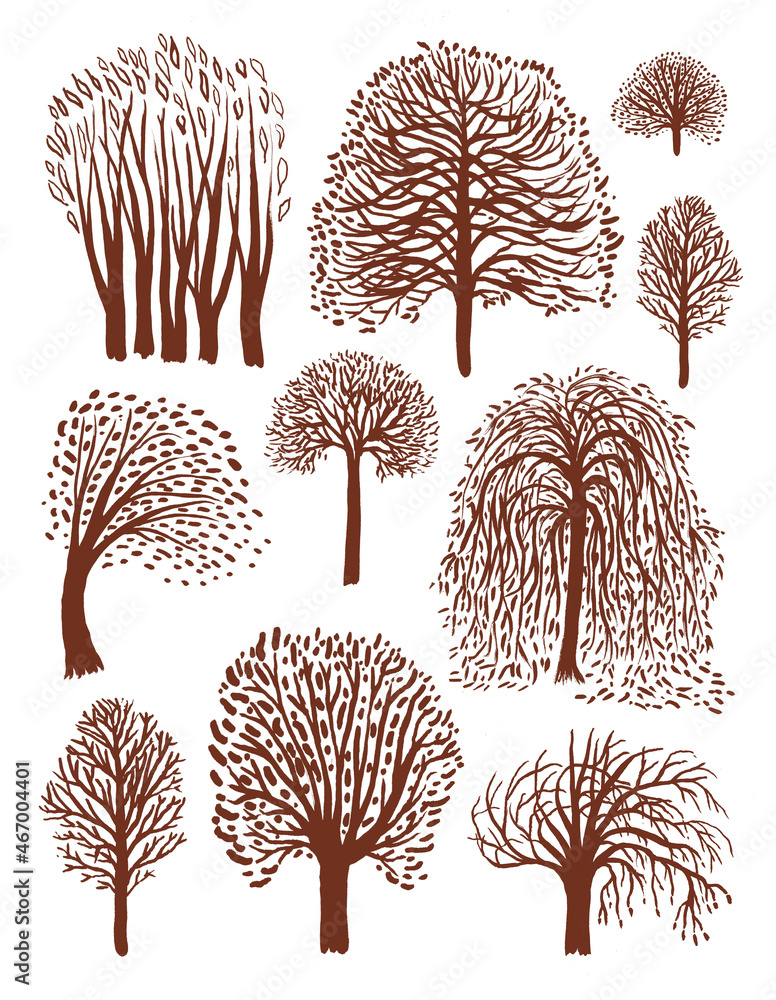
Trees and branching patterns Stock Illustration Adobe Stock
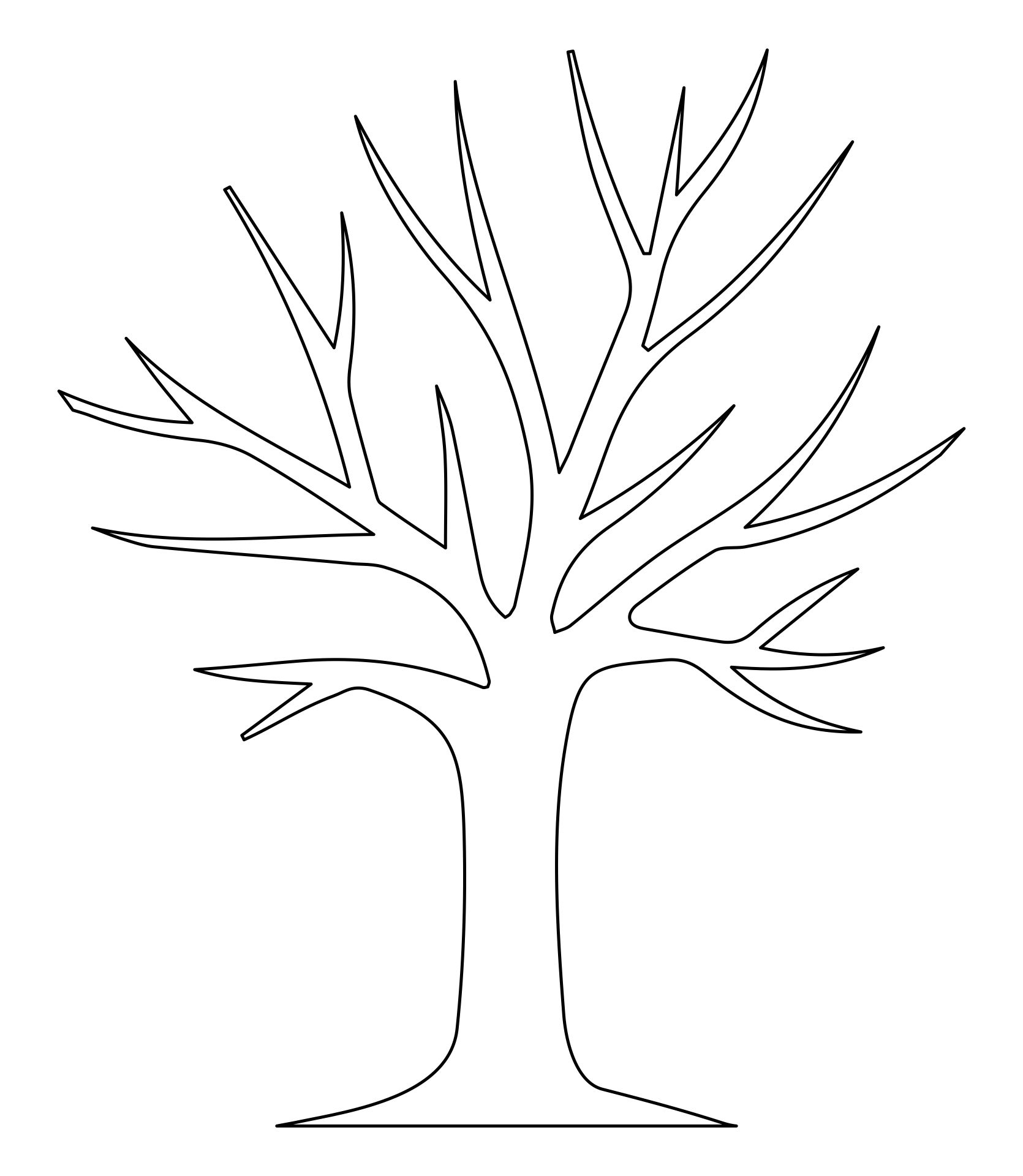
Tree Branches With Pattern 10 Free PDF Printables Printablee

patterns and instructions Botanica Mathematica

TreeBranch Patterns Royalty Free Stock Photo Image 581765

Image Tree branch pattern against sky Stock photo by JF Maion
Seamless pattern of tree branches. Vector illustration Stock Vector

Free Images tree, branch, silhouette, winter, abstract, black and

Tree Branches Seamless Pattern. 1952940 Vector Art at Vecteezy

Main concepts in plant architecture. (A) Growth pattern indeterminate

The Forming Tree — The Nature Institute
This White Ash, Fraxinus Americana, Has A Upswept, Pinnate Branches That Make A Broad, Convergent, Nonhierarchical Crown.
Web The Aim Of This Study Was To Develop A New Method For 3D Reconstruction Of Actual Tree Shape And To Establish A Theoretical Formulation For Elucidating The Structure And Function Of Tree.
In Addition, Because Of Branching Pattern, The New Leaves Grow At Top Such A Way That They Avoid Shading The Older Leaves From Sunlight.
Web The Arrangement And Position Of The Branches On A Tree Give The Tree Its Shape.
Related Post: